Nyhet
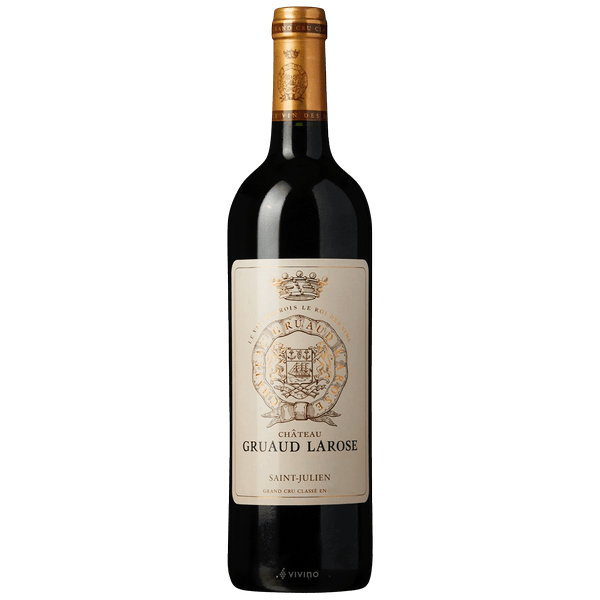
Château Gruaud-Larose 2023
| Distrikt | Saint-Julien |
| Druvor | Cabernet Franc, Merlot |
| Årgång | 2023 |
| Fyllighet | 9 |
| Fruktsyra | 9 |
| Strävhet | 9 |
| Procucenter | Château Gruaud Larose |
| Artikelnr | Gruaud-Larose 904 |
| Lagerstatus | |
| Förpackningsmaterial | Trälåda OWC |
| Fraktkostnad | 169:- |
| Avnjutes mellan | 2026 - 2046 |
Här redovisar och presenterar vi kända vinskribenters utlåtande om specifika viner. Utöver dessa lägger vi in en egen kommentar när vi har provat samma vin.
Druvor
84% Cabernet Sauvignon, 12% Merlot & 4% Cabernet Franc
Tasting note
The 2023 Gruaud Larose has turned out beautifully, unwinding in the glass with complex aromas of cassis, dark berries, burning embers, petroleum jelly and violets. Medium- to full-bodied, it's suave and polished, with sweet tannins, ripe acids and a seamless, charming profile. Checking in at a modest 12.6% alcohol, this blend of 83% Cabernet Sauvignon, 14.5% Merlot and 3.5% Cabernet Franc is the result of an extended block-by-block harvest that began on September 11 and only concluded on October 3.
In recent years, Gruaud Larose has been transformed. This 92-hectare vineyard, occupying a single block on the plateau of Saint-Julien, has been extensively restructured: in the past, Merlot, susceptible to frost, had been planted in the highest parts of the vineyards for protection—but those just happened to be the sites best adapted to Cabernet Sauvignon. Now, varieties and soil types are better matched (50% of the vineyard has been replanted); yields are lower, and farming is better: 2019 marked the beginning of organic conversion, but beyond that, the aspiration is to create a durable ecosystem, with wildlife corridors, agroforestry (3,000 trees have been planted), insect houses and so on; soils are worked less often and less deeply and sowed with cover crops. In the winery, the fruit sees multiple sortings before macerations that are gentle but protracted, at comparatively low temperatures, and great attention is paid to selecting which lots of press wine to include in the blend. The results are compelling. This doesn't mark a return to the muscular, rich, rustic style of the Cordier era's heyday, but nor does contemporary Gruaud Larose have anything in common with the rather lean, malnourished wines frequently produced in the late 1990s and early 2000s. Instead, we are learning that Gruaud Larose can produce wines that are both elegant and intense.
-
Årgången 2020
Årgången 2020 kommer att komma ihåg för den tidiga utvecklingen av vinstockarna. Mellan oktober 2019 och februari 2020 bidrog vissa episoder av regn till att skapa tillräckliga vattenreserver. En varm vår med kraftiga regn gynnade tidig men heterogen knoppsprängning. Ändå begränsades denna heterogenitet av arbete på jorden, vilket gjorde att den värmdes upp snabbare. Medan de varma temperaturerna och kraftiga nederbörden i april väckte oro för vinrankornas hälsa, möjliggjorde de goda väderförhållandena i mitten av maj en snabb och jämn blomning. Månaderna juni och juli var extremt torra (5 mm nederbörd på 55 dagar), vilket orsakade betydande vattenstress. På grund av detta torra väder tillsammans med kyliga temperaturer, utfördes en noggrann bladstrippning på den östra sidan av vingården (där solen går upp), för att uppmuntra fenolsyntesen av druvorna. Regniga dagar i början av augusti återupplivade druvornas mognadsprocess. Vingårdens fantastiska läge och vingårdsteamens arbete minimerade hälsoriskerna i samband med hög luftfuktighet och värme. Den indiska sommaren fram till skörden möjliggjorde en optimal mognad av druvorna. Med hänsyn till årgångens brådska och de höga temperaturerna i september togs beslutet att skörda tidigt, för att bevara druvornas spänning och täthet.
-
In the last few years, Gruaud Larose has been transformed. This 92-hectare vineyard, occupying a single block on the plateau of Saint-Julien, has been extensively restructured. In the past, Merlot, susceptible to frost, had been planted in the highest parts of the vineyards for protection—but those just happened to be the sites best adapted to Cabernet Sauvignon. Now, varieties and soil types are better matched (50% of the vineyard has been replanted), yields are lower, and farming is better: 2019 marked the beginning of organic conversion, but beyond that, the aspiration is to create a durable ecosystem, with wildlife corridors, agroforestry (3,000 trees have been planted), insect houses and so on. Soils are worked less often and less deeply and sowed with cover crops. In the winery, the fruit sees multiple sorting before macerations that are gentle but protracted, at comparatively low temperatures, and great attention is paid to selecting which lots of press wine to include in the blend. The results, as the 2019 proved and the 2020 now confirms, are compelling. This doesn't mark a return to the muscular, rich, rustic style of the Cordier era's heyday, but nor does contemporary Gruaud Larose have anything in common with the rather lean, malnourished wines frequently produced in the late 1990s and early 2000s. Instead, we are learning that Gruaud Larose can produce wines that are both elegant and intense. If this trajectory continues, it wouldn't be an exaggeration to say that the château will be entering a new golden era.
-