Nyhet
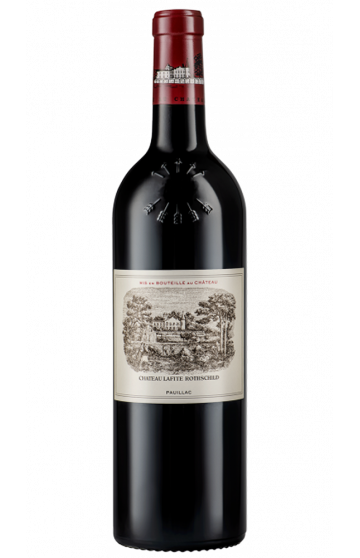
Château Lafite-Rothschild 2024
| Distrikt | Pauillac |
| Druvor | Cabernet Sauvignon, Merlot, Petit Verdot |
| Fyllighet | 9 |
| Fruktsyra | 9 |
| Strävhet | 9 |
| Procucenter | Château Lafite Rothschild |
| Artikelnr | Lafite-Rothschild 902 |
| Lagerstatus | |
| Förpackningsmaterial | Trälåda OWC |
| Fraktkostnad | 169:- |
| Avnjutes mellan | 2026 - 2056 |
Här redovisar och presenterar vi kända vinskribenters utlåtande om specifika viner. Utöver dessa lägger vi in en egen kommentar när vi har provat samma vin.
Druvor
96% cabernet sauvignon, 3% merlot & 1% petit verdot.
Observera att det finns några undantagsfall som årgången 1994 (99 % Cabernet Sauvignon och 1 % Petit Verdot) eller årgången 1961 (100 % Cabernet Sauvignon).
Lagring på ekfat
Årsproduktion
Tasting note
A blend of 96% Cabernet Sauvignon, 3% Merlot and 1% Petit Verdot, the 2024 Lafite Rothschild offers up aromas of minty blackcurrants, violets, incense, loamy soil and cigar box, followed by a medium-bodied, pillowy and open-knit palate built around tangy acids and powdery tannins, concluding with a discreetly herbal finish. Harvest began on September 24 and concluded on October 4, delivering a Lafite in something of a throwback style, nodding to the wines made here in the 1970s.
-
Today, Château Lafite Rothschild amounts to some 110 hectares planted to some 900,000 vines (including 4.5 hectares of Cabernet Sauvignon in Saint-Estèphe). If that figure strikes readers as smaller than it used to be, that's because Lafite has ripped up some less optimally situated plots that never tended to produce wine fit for inclusion in the grand vin. As of 2021, what's more, organic conversion is underway (15 hectares are already farmed biodynamically), and hedges and flowering borders, planted with native species, now begin to break up the monoculture of the vine. Cover crops, too, have been added to the viticultural team's agronomic arsenal and are delivering good results in parcels with more humid or clay-rich soils. In the winery, Lafite is meticulously traditional—the grapes are sorted twice, once optically, and see a classical maceration in wooden and cement tanks with pump-overs and some use of the gentle "air pulse" system that disrupts the cap and oxygenates the ferment without the need for a full pump-over. Malolactic fermentation, as ever, is in tank, and the wine matures in barrels that are mostly produced in-house, with a light toast and favoring the forests of Allier and Nevers. Each vintage is racked three times, traditionally, with one egg white fining (which requires up to 8,000 eggs). As is the case almost everywhere in the Médoc, the tendency is for less and less Merlot in the assemblage.
-