Nyhet
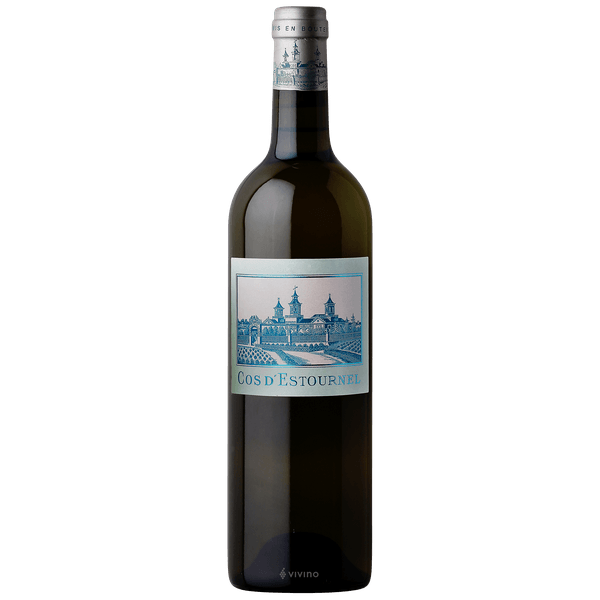
Cos d'Estournel Blanc 2008
| Distrikt | Saint-Éstephe |
| Druvor | Sauvignon Blanc, Sémillon |
| Årgång | 2008 |
| Fyllighet | 7 |
| Fruktsyra | 9 |
| Sötma | 1 |
| Procucenter | Cos d'Estournel |
| Artikelnr | Cos dEstournel Blanc 921 |
| Lagerstatus | |
| Förpackningsmaterial | Trälåda OWC |
| Fraktkostnad | 169:- |
| Avnjutes mellan | 2026 - 2031 |
Här redovisar och presenterar vi kända vinskribenters utlåtande om specifika viner. Utöver dessa lägger vi in en egen kommentar när vi har provat samma vin.
Kraften i elementen
Druvor
80% Sauvignon Blanc & 20% Semillon
Tasting note
A blend of 80% Sauvignon Blanc and 20% Semillon shows lots of grapefruit, citrus and tart acids in a medium-bodied style.
-
Cos d'Estournel may neighbor Lafite-Rothschild, but its vineyards are very different, rising from the banks of the Jalle de Breuil—the small stream that divides Pauillac and Saint-Estèphe—to a height of fully 26 meters above sea level. Cos's clay-gravel vineyards occupy the plateau on top, as well as straddling the slopes, scrolling round the hillside from the east-facing holdings overlooking Lafite to fully south-facing holdings that look out over the Gironde. It's surely this variety of expositions—as well as an average vine age of 55 years—that lend the wine its completeness and plenitude. Soil studies, undertaken in 2003, inform parcel-by-parcel farming and winemaking, as well as replanting, where Cos's important percentage of Merlot is gradually tending to diminish. The last two decades have witnessed considerable evolution: herbicides were banished and experimentation with cover crops began in 2002; a new gravity-flow winery was built in 2008; and winemaking and picking dates have evolved. In the past, the wines sometimes flirted with extremes; but in pushing the boundaries, sometimes one exceeds them. Today, harvest is a touch earlier than was the case a decade ago; fermentation temperatures are cooler and the wines racked less frequently; and percentages of new oak are both much more modest, in 2019 amounting to only 55% (mainly from Taransaud, Fraçois Frères and Berthomieu) and, above all, much less heavily toasted. The result? Wines of greater textural refinement and more vibrant fruit flavors, with as much intensity of flavor and persistence as ever. I suspect, what's more, that today's more reductive élevage will see them age very well indeed. Proprietor Michel Reybier is surely proud that two decades of unremitting investment in quality are today consistently delivering some of the Médoc's very finest wines.
-
Robert Parker Wine Advocate