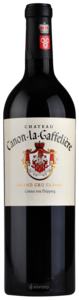
Château Canon 2023
| Distrikt | Saint-Émilion |
| Druvor | Cabernet Franc, Merlot |
| Årgång | 2023 |
| Fyllighet | 9 |
| Fruktsyra | 9 |
| Strävhet | 9 |
| Procucenter | Château Canon |
| Artikelnr | Kanon. 902 |
| Lagerstatus | |
| Förpackningsmaterial | Trälåda OWC |
| Fraktkostnad | 169:- |
| Avnjutes mellan | 2026 - 2046 |
Här redovisar och presenterar vi kända vinskribenters utlåtande om specifika viner. Utöver dessa lägger vi in en egen kommentar när vi har provat samma vin.
Jeff Leve, The Wine Cellar Insider
Rich, opulent, heady, and hedonistically-styled wine, the nose kicks off with its showy display of black cherries, black raspberries, violets, roses, lilacs, licorice, mint, tobacco, and an array of spices. The palate is geared for pleasure, with multiple layers of richly textured, flamboyant dark, mildly-smoked red fruits, paired with the essence of minerality and a touch of forest greenery. This is the perfect backdrop for the wine's layers of salt-tinged fruits that linger, build, and expand, allowing you to experience a wine with a beautiful sense of purity and no hard edges. The wine blends 71% Merlot with 29% Cabernet Franc. Drink from 2029- 2060.
Robert Parker Wine Advocate
The 2023 Canon has turned out brilliantly, unfurling aromas of cassis, mulberries, rose petals, raspberries and violets. Medium- to full-bodied, it is layered and finely textured, built around a seamless, deep core of fruit framed by powdery, velvety tannins and concludes with a long, chalk-inflected, crystalline finish. Highly expressive of its terroir through its powdery tannins and limestone-driven finish, it is also very much of its vintage, combining vibrant acidity with an unusually approachable profile. This is a blend of 71% Merlot and 29% Cabernet Franc, all matured in 50% new oak.
Jeb Dunnuck
Based on 71% Merlot and 29% Cabernet Franc and aged 16-18 months in 50% new oak including three foudres, the 2023 Château Canon is a more medium-bodied, finesse-driven wine compared to its sibling Château Berliquet, which is always a bigger, richer wine. It offers red fruits, crushed stone, graphite, chalk, and floral notes on the nose. On the palate, it's focused, with good acidity, just about flawless balance, and a gorgeous finish. Give it 3-4 years if you can and this will be a classic Canon to enjoy over the following two decades. It reminds me slightly of the 2001. Tasted multiple times. Drink 2029-2046.
James Suckling
This may be one of the wines of the vintage, with brightness and ethereal character that give it an almost magical presence. Aromas of violets, lavender and blackberries with transparency and vividness. It’s medium-bodied with elegance and presence that give endless length. A benchmark. The tannins and acidity caress every millimetter of your palate. 71% merlot and 29% cabernet franc. Try after 2030, but already a joy to taste.
Druvor
71% Merlot & 29% Cabernet Franc
Tasting note
The 2023 Canon has turned out brilliantly, unfurling aromas of cassis, mulberries, rose petals, raspberries and violets. Medium- to full-bodied, it is layered and finely textured, built around a seamless, deep core of fruit framed by powdery, velvety tannins and concludes with a long, chalk-inflected, crystalline finish. Highly expressive of its terroir through its powdery tannins and limestone-driven finish, it is also very much of its vintage, combining vibrant acidity with an unusually approachable profile. This is a blend of 71% Merlot and 29% Cabernet Franc, all matured in 50% new oak.
In the last few years, this sleeping giant has well and truly reawakened, and the 2019 seems to me the finest Canon that Nicolas Audebert and his team have yet produced. Extensive replanting between 1996 and 2003, overseen by Audebert's predecessor, John Kolasa, saw some 50% of the estate's 22 hectares replaced. The fact that these vines are now arriving at full maturity surely goes some way to accounting for Canon's contemporary renaissance. Now, the team is working on restructuring the rest, combining massal selections and clones. Viticulture is thoughtful, with cover crops across the estate, and the terroir itself is relatively homogeneous: solid limestone covered by some 0.25-0.7 meters of clay, with a more or less uniform exposition on Saint-Émilion's plateau. There's also one small parcel in the town itself and another by Berliquet. Today, the vineyard is planted with about 70% Merlot and 30% Cabernet Franc, and there are no plans to radically alter that. Winemaking privileges finesse over power, though a certain richness and texture can be taken for granted with a site like this, and maturation is in 50% new oak (mostly from Taransaud, Emptos, Sylvain and Quintessence).
-
Robert Parker Wine Advocate