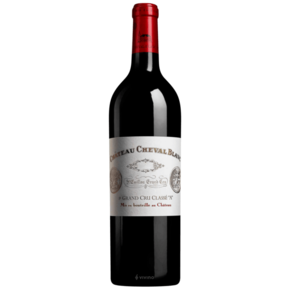
Château Cheval Blanc 2022
| Distrikt | Saint-Émilion |
| Druvor | Cabernet Sauvignon, Cabernet Franc, Merlot |
| Årgång | 2022 |
| Fyllighet | 9 |
| Fruktsyra | 9 |
| Strävhet | 9 |
| Procucenter | Château Cheval Blanc |
| Artikelnr | Cheval Blanc 903 |
| Lagerstatus | |
| Förpackningsmaterial | Trälåda OWC |
| Fraktkostnad | 169:- |
| Avnjutes mellan | 2027 - 2060 |
Här redovisar och presenterar vi kända vinskribenters utlåtande om specifika viner. Utöver dessa lägger vi in en egen kommentar när vi har provat samma vin.
Druvor
53% Merlot, 46% Cabernet Franc, & 1% Cabernet Sauvignon
Tasting note
The 2022 Château Cheval Blanc has turned out beautifully in bottle, bursting from the glass with aromas of minty mulberries, licorice and rose petals mingled with hints of pipe tobacco and baking chocolate. Full-bodied, rich and velvety, it's layered and unctuous, with sweet, powdery tannins and a broad, enveloping profile, concluding with a long, fragrant finish. Flamboyant but controlled, this blend of 53% Merlot, 46% Cabernet Franc and 1% Cabernet Sauvignon spent only 12 months in barrique. There's no Petit Cheval this year, as what little wasn't deemed up to the level of the grand vin was sold off in bulk.
One of Bordeaux's most complex terroirs, Cheval Blanc sits on the site of an ancient river delta, with (to generalize) clay-rich soils in the lower-lying parts where rivulets once flowed and gravel and sand elsewhere. This complexity is reflected, of course, in the resulting wine but also in how it is farmed and made, with thoughtful use of cover crops according to soil type and parcel-by-parcel vinification. A concerted effort is being made, moreover, to bring life back to the vineyard, with hedges of native species to act as wildlife corridors and fruit trees planted among the vines. The same attention to detail that's applied in the vineyards, for example with regard to developing and testing an in-house massal selection, is applied in the cellar, where cooperage trials are notable for their exigence.
The 2023 vintage has turned out just as well in bottle as I had hoped. Director Pierre-Olivier Clouet described the season as unremarkable in terms of rainfall overall (though thunderstorms in June gave rise to almost tropical conditions that amplified disease pressure), observing that temperatures, while high, were not particularly extreme in the context of the last decade. Flowering was rapid and successful, as at other addresses, and in Cabernet, maturity took its time coming, making for a protracted harvest between September 6 and October 3.
-
Robert Parker Wine Advocate