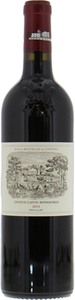
Château Latour 2016
| Distrikt | Pauillac |
| Druvor | Cabernet Sauvignon, Cabernet Franc, Merlot, Petit Verdot |
| Årgång | 2016 |
| Fyllighet | 9 |
| Fruktsyra | 9 |
| Strävhet | 9 |
| Procucenter | Château Latour |
| Artikelnr | Latour 1001 |
| Lagerstatus | |
| Förpackningsmaterial | Trälåda OWC |
| Fraktkostnad | 169:- |
| Avnjutes mellan | 2026 - 2066 |
Här redovisar och presenterar vi kända vinskribenters utlåtande om specifika viner. Utöver dessa lägger vi in en egen kommentar när vi har provat samma vin.
Andreas Larsson - Tasted
An incredibly pure and intense perfume offering floral and elegant notes with violet, inky dark fruit, crème de cassis, fine tobacco with stony and gravelly notes. The palate is impressive combining tremendous power and elegance with an immense and unprecedented length, very classy and complex with layers of pure inky fruit, tobacco, gravel, fine oak that keeps lingering forever, unquestionably one of the finest young wines I ever tasted.
Falstaff
Deep dark ruby colour, opaque core with subtle rim. On the nose you detect blackberry, liquorice, black cherry, a touch of ripe plum, savoury oak and a hint of violet. Intense blackberry fruit on the palate, full of energy, taut and with perfect tannins. It seems monolithic and cool at first, but has balanced sweetness, great charm and very long on the palate. A perfect Cabernet wine that seems built for eternity.
Jeff Leve, The Wine Cellar Insider
With a deep, dark hue, you already note the tobacco, cigar box, wet earth, cassis, forest floor and blackberry characteristics with little effort, That\'s just the perfume. On the palate you find volume, intensity, purity, complexity, freshness and silky, salty tannins. The wine fills your mouth with a perfect combination of acidity and fruit. The mineral driven, oceanic sensation that accompanies the fruit is just great, staying with you as all that ripe, red-fruit builds and expands. Elegant, powerful and refined, this will age for 4-5-6 decades or longer. The wine was produced from blending 92.9% Cabernet Sauvignon and 7.1% Merlot. 100 Points
Robert Parker Wine Advocate
On paper, the combination of this estate and this vintage should be a match made in heaven, and the 2016 Latour has already received resounding acclaim among the wine trade and commentariat. The result in the glass, however, didn't quite meet my lofty expectations, offering up aromas of cassis and blackberries mingled with cigar ash, pencil shavings and saddle leather, followed by a medium to full-bodied, rich and layered palate that's undeniably concentrated and muscular but also somewhat austerely structured, with firm tannins that assert themselves on the somewhat carnal finish. For sheer intensity of flavor, the 2016 is certainly impressive, but it appears to be missing the purity and precision that one might expect for a first growth in a great 21st-century vintage. Perhaps the wine's somewhat wild, rustic characteristics will integrate more seamlessly as more bottle bouquet develops, but my immediate reaction to tasting it was to purchase two more cases of the superb 2016 Forts de Latour.
James Suckling
I am dreaming as I smell this wine, perfectly ripe cabernet sauvignon with currants, tobacco and fresh mint. Orange blossoms too. This amazing nose is so complex. Medium- to full-bodied, this has has perfectly integrated tannins that you don't feel but know are there, elevating the wine to another level. It's very drinkable because of its stellar balance, yet the tannic tension gives it energy and seamless texture. A benchmark Latour that reminds me of the 1982 in many ways. Drink or hold.
Jeb Dunnuck
Retasting the 2016 Château Latour next to both the 2010 and 2022 had me feeling like a kid in a candy store. Needing lots of air to show at its best, its dense purple hue is followed by quintessential Latour notes of smoky blackcurrants, scorched earth, graphite, and lead pencil shavings. This carries to a medium to full-bodied Pauillac that has lively acids, a pure, seamless, layered mouthfeel, building yet perfectly ripe tannins, and that rare Latour mix of power, austerity, and elegance that makes this château so compelling. Pulled from just 36% of the total production, the 2016 is 92.9% Cabernet Sauvignon and 7.1% Merlot hitting 13.5 alcohol with an IPT of 83. It's primarily academic at this stage, but it's starting to round the corner and clearly, with its level of fruit and overall balance, offers pleasure. I think it needs another 5-7 years to hit the early stages of its prime drinking window and will have 75-100 years of overall longevity.
Druvor
90.5% Cabernet Sauvignon, 9.5% Merlot & 0.5% Petit Verdot.
Tasting note
On paper, the combination of this estate and this vintage should be a match made in heaven, and the 2016 Latour has already received resounding acclaim among the wine trade and commentariat. The result in the glass, however, didn't quite meet my lofty expectations, offering up aromas of cassis and blackberries mingled with cigar ash, pencil shavings and saddle leather, followed by a medium to full-bodied, rich and layered palate that's undeniably concentrated and muscular but also somewhat austerely structured, with firm tannins that assert themselves on the somewhat carnal finish. For sheer intensity of flavor, the 2016 is certainly impressive, but it appears to be missing the purity and precision that one might expect for a first growth in a great 21st-century vintage. Perhaps the wine's somewhat wild, rustic characteristics will integrate more seamlessly as more bottle bouquet develops, but my immediate reaction to tasting it was to purchase two more cases of the superb 2016 Forts de Latour.
Château Latour left the en primeur system in 2012, so the estate's latest releases are the 2020 Pauillac, 2019 Forts de Latour and 2016 Grand Vin de Latour, which I tasted at the estate with Technical Director Hélène Génin. Certified organic since 2018, most of Latour's historic "Enclos" is being farmed biodynamically these days, and its entirety is now cultivated by horse to minimize soil compaction and preserve intact as many old vines as possible. But the objective, above all, rather than subscribing to any particular theoretical approach, is to treat the vineyard holistically, as a system, within and with nature rather than against it. Winemaking is traditional, with macerations in stainless steel followed by maturation in barrel with rackings every three months and one fining with egg whites. Great attention is paid to the choice of barrels: each lot is tasted and its style defined before it's barreled down in cooperage adapted to that style. But if these methods realize the potential of this great site, what makes Latour's site so great? After all, this isn't the only vineyard to occupy the quaternary gravel terrace that makes its appearance along the banks of the Gironde. When I posed this question, Génin's response was to point to Latour's lenses of blue clay interfingered with and underlying those gravels. It's these pockets of clay in just the right places, Génin contends, that contain the secret to the wine's elegantly muscular power and immense longevity.
Robert Parker Wine Advocate