Nyhet
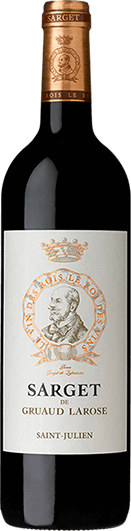
Sarget de Gruaud-Larose 2006
| Distrikt | Saint-Julien |
| Druvor | Cabernet Sauvignon, Cabernet Franc, Merlot |
| Årgång | 2006 |
| Fyllighet | 8 |
| Fruktsyra | 8 |
| Strävhet | 8 |
| Procucenter | Château Gruaud Larose |
| Artikelnr | Gruaud Larose 926 |
| Lagerstatus | |
| Förpackningsmaterial | Trälåda OWC |
| Fraktkostnad | 169:- |
| Avnjutes mellan | 2026 - 2031 |
Här redovisar och presenterar vi kända vinskribenters utlåtande om specifika viner. Utöver dessa lägger vi in en egen kommentar när vi har provat samma vin.
Druvor
70% Cabernet Sauvignon, 23% Merlot, 4% Petit Verdot & 3% Cabernet Franc
Tasting note
A moderate garnet/ruby colour. A light blackberry, slightly earthy nose that is showing some greenness but nothing offensive. What it does lack is a little vigour. A medium-bodied palate, rounded tannins, simple with cedar, tobacco, blackberry leaf and a peppery, rather lean Merlot-dominated finish. Simple, fine early drinking wine.
-
In recent years, Gruaud Larose has been transformed. This 92-hectare vineyard, occupying a single block on the plateau of Saint-Julien, has been extensively restructured: in the past, Merlot, susceptible to frost, had been planted in the highest parts of the vineyards for protection—but those just happened to be the sites best adapted to Cabernet Sauvignon. Now, varieties and soil types are better matched (50% of the vineyard has been replanted); yields are lower, and farming is better: 2019 marked the beginning of organic conversion, but beyond that, the aspiration is to create a durable ecosystem, with wildlife corridors, agroforestry (3,000 trees have been planted), insect houses and so on; soils are worked less often and less deeply and sowed with cover crops. In the winery, the fruit sees multiple sortings before macerations that are gentle but protracted, at comparatively low temperatures, and great attention is paid to selecting which lots of press wine to include in the blend. The results are compelling. This doesn't mark a return to the muscular, rich, rustic style of the Cordier era's heyday, but nor does contemporary Gruaud Larose have anything in common with the rather lean, malnourished wines frequently produced in the late 1990s and early 2000s. Instead, we are learning that Gruaud Larose can produce wines that are both elegant and intense.
-