Nyhet

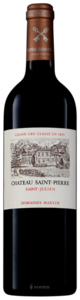
Château Léoville Barton 2024
| Distrikt | Saint-Julien |
| Druvor | Cabernet Sauvignon, Cabernet Franc, Merlot |
| Fyllighet | 9 |
| Fruktsyra | 9 |
| Strävhet | 9 |
| Procucenter | Château Léoville Barton |
| Artikelnr | Leoville Barton 907 |
| Lagerstatus | |
| Förpackningsmaterial | Trälåda OWC |
| Fraktkostnad | 169:- |
| Avnjutes mellan | 2026 - 2046 |
Här redovisar och presenterar vi kända vinskribenters utlåtande om specifika viner. Utöver dessa lägger vi in en egen kommentar när vi har provat samma vin.
Druvor
92% cabernet sauvignon, 6% merlot & 2% cabernet franc
Tasting note
The 2023 Léoville Barton is showing beautifully, wafting from the glass with aromas of cassis, pencil shavings, burning embers and a discreet touch of new oak. Medium- to full-bodied, supple and layered, it's deep, dense and classically structured, with ripe tannins, excellent purity of fruit and a penetrating finish. It's a blend of 87% Cabernet Sauvignon, 10% Merlot and 3% Cabernet Franc that weighs in at 13% alcohol.
This great Médoc second growth has been on a qualitative roll in recent vintages, and the estate's brand-new winery and chai, equipped with smaller fermentation vats to permit more precise parcel-by-parcel selection, is seeing Léoville and Langoa Barton hit even greater heights in terms of precision and finesse. In the vineyards, a steadily increasing percentage is farmed organically, and the old manual methods are perpetuated (tying the vines to their supporting stakes using osier instead of string, removing lateral shoots by hand, etc.). As proprietors of much of the appellation's woodland, the Barton family has always been at the forefront of newly fashionable "agroforestry." And periodic replanting increasingly aims to adapt grape variety to soil type, the heart of Léoville-Barton being, of course, Cabernet Sauvignon growing on the superbly situated quaternary gravel soils of Saint-Julien. In the cellar, barrels are largely supplied by Nadalié, Maury and Taransaud, though trials are underway to reduce the percentage of the rather impactful Maury, and racking remains traditional. A comparatively large percentage of press wine lends backbone and classic grip to the assemblage.
This great Médoc second growth has been on a qualitative roll in recent vintages, and the estate's brand-new winery and chai, equipped with smaller fermentation vats to permit more precise parcel-by-parcel selection, is seeing Léoville and Langoa Barton hit even greater heights in terms of precision and finesse. In the vineyards, a steadily increasing percentage is farmed organically, and the old manual methods are perpetuated (tying the vines to their supporting stakes using osier instead of string, removing lateral shoots by hand, etc.). As proprietors of much of the appellation's woodland, the Barton family has always been at the forefront of newly fashionable "agroforestry." And periodic replanting increasingly aims to adapt grape variety to soil type, the heart of Léoville-Barton being, of course, Cabernet Sauvignon growing on the superbly situated quaternary gravel soils of Saint-Julien. In the cellar, barrels are largely supplied by Nadalié, Maury and Taransaud, though trials are underway to reduce the percentage of the rather impactful Maury, and racking remains traditional. A comparatively large percentage of press wine lends backbone and classic grip to the assemblage.