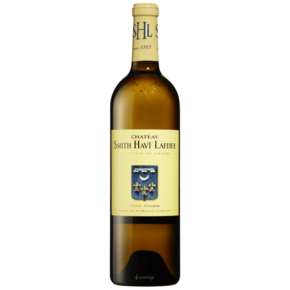
Château Smith Haut Lafitte Blanc 2019
| Distrikt | Péssac-Léognan |
| Druvor | Sauvignon Blanc, Sauvignon Gris, Sémillon |
| Årgång | 2019 |
| Fyllighet | 6 |
| Fruktsyra | 9 |
| Sötma | 1 |
| Procucenter | Château Smith Haut Lafitte |
| Artikelnr | Smith Haut Lafitte Blanc 503 |
| Lagerstatus | |
| Förpackningsmaterial | Trälåda OWC |
| Fraktkostnad | 169:- |
| Avnjutes mellan | 2021 - 2035 |
Här redovisar och presenterar vi kända vinskribenters utlåtande om specifika viner. Utöver dessa lägger vi in en egen kommentar när vi har provat samma vin.
Druvor
90% Sauvignon Blanc with 5% Sauvignon Gris & 5% Sémillon
Tasting note
'The 2019 Smith Haut Lafitte Blanc has turned out very well in bottle, reflecting the estate's volition to craft more structured, age-worthy whites. Offering up aromas of gooseberry, nectarine, mint and lemongrass mingled with hints of pastry cream, almond paste and smoke, it's full-bodied, satiny and incisive, with a textural attack that segues into a fleshy but promisingly tightly wound mid-palate, concluding with a saline finish. As usual, the blend features a small percentage of Sauvignon Gris, which brings more dry extract to the ensemble.'
Certified organic with the 2019 vintage, this year marks a waypoint—rather than a stopping point—in Smith Haut Lafitte's agronomic journey. The Cathiard family banished herbicides at this address in 1991, radically reducing chemical treatments and suffering the consequences for several years in the form of much diminished yields (today, happily, materiel and techniques are more sophisticated). In addition to organic methods, cover crops have been deployed on the vineyard's central blocks and western band, where soils are less well drained. Hedges have been planted to encourage biodiversity, and ultraviolet treatments are being trialed as an alternative to copper sulfate. In addition to such initiatives, the technical team is adapting to a warmer climate: that means picking a touch earlier, certainly, but more importantly, adapting in the vineyards, with somewhat lower canopies and an end to deleafing to retain fresh, vibrant flavors. Winemaking, too, is a little gentler: cool but protracted macerations, with periodic punch-downs, for reds and whole-cluster pressing with an inerted press for whites. This has brought new structural elegance and energy to the estate's wines. It surely helps that as much as possible is done in-house: since 1995, the Cathiards have their own nursery for their own massale selections, in partnership with Bérillon, and barrels are made in the château's own on-site cooperage too, favoring the forests of Tronçais and Jupilles for reds, Loches (which brings tension) for whites. All this is symptomatic of the attention to detail and seriousness that the Cathiards, and their technical director Fabien Teitgen, have brought to this estate; and the result, in 2019, is one of the finest wines they've produced to date.
Robert Parker Wine Advocate